
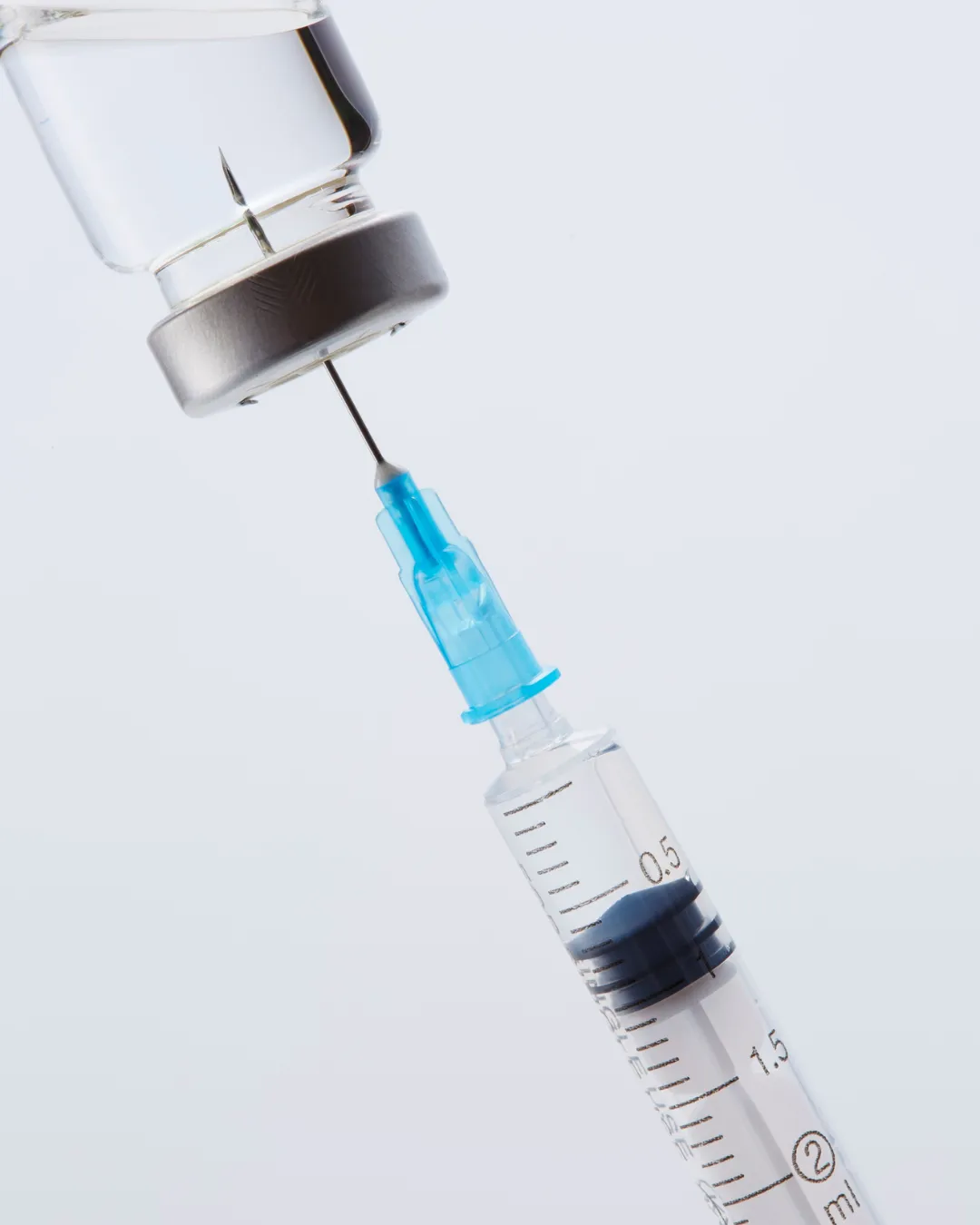
Testosterone Injection Pain: Carrier Oil Guide for Arizona Men
By Jeremiah Velasquez, FNP-BC, AGACNP-BC Founder, Steel City HRT & Weight Loss | Board-Certified Family & Acute Care Nurse Practitioner NPI: 1841894003
Post-injection pain (PIP) after testosterone therapy is most commonly caused by carrier oil viscosity and chemical preservatives in the formulation — not the testosterone molecule itself. High-viscosity oils like sesame oil require large-gauge needles that mechanically traumatize tissue and deposit fluid in tight pockets that trigger days of inflammation. Switching to a low-viscosity grapeseed oil formulation allows ultra-fine needle protocols and dramatically reduces injection site soreness.
If you've been told that soreness after testosterone injections is just something you push through, you've been handed bad information — and it's quietly working against you.
Men on TRT in Gilbert, Arizona and across the state are showing up on injection day. They're consistent. They're doing the work. They want to be the version of themselves that's fully present — the one with energy left at the end of the day, the one who makes it to the weekend in one piece. But 48 to 72 hours after every shot, they're limping. They're dreading injection day before it arrives. They're starting to wonder if pain is just the price of being on testosterone.
It isn't. The soreness is real. But the cause isn't the testosterone.
In most cases, the culprit is the vehicle your testosterone is dissolved in — the carrier oil and chemical preservatives compounded into your formulation. And fixing it is more straightforward than most providers will ever take the time to explain.
Why Do Testosterone Injections Cause Pain, Lumps, and Hard Knots?
Your experience is legitimate. The difference between mild muscle soreness and a hot, rigid lump that lingers for four days is not subtle — and it isn't in your head.
Post-injection pain, or PIP — the localized inflammation, swelling, and soreness that develops in the 24 to 72 hours following a testosterone injection — is a recognized and entirely preventable clinical problem. PIP is the inflammatory response triggered when injected fluid irritates surrounding muscle and connective tissue. It is not confirmation that your body is responding to therapy. It is a signal that your formulation is wrong for your tissue.
The system failed you on this one. Commercial testosterone formulations were designed around pharmaceutical shelf stability and manufacturing convenience — not around your injection experience. Nobody handed you a viscosity chart when they gave you your first vial.
Men across Arizona asking why their testosterone shots hurt for days are usually pointing at exactly the right problem — they've just been given no language for it. There are three primary causes driving most injection-site pain in men on TRT. One: a carrier oil so viscous it requires large-gauge needles — the kind that do genuine mechanical damage to muscle tissue every injection. Two: chemical preservatives like chlorobutanol or high-concentration benzyl alcohol compounded directly into the formula, both potent tissue irritants. Three: oil that pools into a tight fascial pocket rather than dispersing through surrounding tissue, creating a fluid reservoir your immune system mounts a response against.
Arizona's desert heat adds a layer most providers never mention. Elevated ambient temperatures affect tissue perfusion and local inflammation dynamics — what might be tolerable soreness in a cooler climate can tip into a fully inflamed knot when your body is already running hot.
That's not soreness. That's preventable inflammation driven by a formulation decision that was never explained to you.
Key takeaway: Post-injection pain is primarily a formulation problem, not a testosterone problem. Carrier oil viscosity and preservative concentration are the most overlooked drivers of chronic injection-site inflammation in men on TRT.
What's Actually Happening Inside Your Muscle When You Inject High-Viscosity Oil?
Here's what most people don't know about the vehicle their testosterone comes in: the oil behaves according to the same fluid mechanics principles that govern industrial hydraulics — and those principles have direct consequences for your tissue every single injection.
The governing concept is Poiseuille's Law, a fluid dynamics principle established by physician Jean Léonard Marie Poiseuille in 1838. Applied to testosterone injections, it describes a direct relationship: the thicker the oil, the wider the needle bore required to push it through at a reasonable rate. Attempt to force a high-viscosity oil through a fine-gauge needle and you have two bad outcomes — unmanageable injection resistance, or so much manual pressure through the plunger that the oil enters the tissue traumatically rather than gently.
The analogy is simple. Pushing cold honey through a cocktail straw requires enough force to distort the straw. Your muscle tissue is the straw.
Here is how the three most common carrier oils compare. Sesame oil — one of the most frequently used testosterone vehicles — has a dynamic viscosity of approximately 65 mPa·s (millipascal-seconds). Injecting it with anything approaching clinical comfort requires a 22-gauge needle or wider. That needle is doing real mechanical damage to your tissue on every injection, and every injection compounds the progressive localized scarring from the last one. Cottonseed oil, the commercial standard in most brand-name testosterone products, sits at approximately 58 mPa·s — still thick enough to demand larger gauges and slow enough to pool in a fluid pocket your body struggles to absorb. Grapeseed oil changes the entire equation. At approximately 43.83 mPa·s, it flows freely through a 25-gauge to 27-gauge needle — gauges fine enough that they're standard in insulin delivery — enabling rapid tissue dispersion with minimal mechanical disruption.
The preservative burden compounds the viscosity problem. According to published pharmaceutical compounding data, certain multi-ester testosterone blends carry benzyl alcohol concentrations approaching 100 mg/mL — a level consistently associated with significant tissue irritation. Single-ester testosterone cypionate formulations typically operate at a baseline near 9.45 mg/mL. That tenfold-plus reduction in preservative concentration represents a substantial drop in chemical irritant load at the injection site — a difference that accumulates meaningfully across months and years of weekly injections.
Key takeaway: Carrier oil viscosity directly determines the needle gauge required and the rate at which oil disperses through muscle. Grapeseed oil's lower viscosity (~43.83 mPa·s versus sesame oil's ~65 mPa·s) enables smaller needles and faster tissue dispersion — the two primary mechanical factors in eliminating chronic post-injection inflammation.
What Does a Pain-Free Testosterone Protocol Actually Look Like in Arizona?
If you've been white-knuckling injection day in Gilbert or managing through it from Queen Creek, there is a clinical path out — and accessing it does not require a new lab workup from scratch or a long waitlist with a specialist.
Effective formulation-optimized TRT follows a clear path. Starting with a current labs review to confirm total and free testosterone, estradiol, hematocrit, and relevant metabolic markers. Followed by a direct conversation with a provider about your existing formulation — the carrier oil, the preservative concentration, the ester, and the needle gauge you've been using. Ending with a transition to a custom-compounded single-ester testosterone cypionate in pharmaceutical-grade grapeseed oil, sourced from a licensed 503a compounding pharmacy and shipped directly to your door.
The shift to grapeseed oil unlocks a protocol that looks nothing like what most men on TRT have experienced:
Ultra-fine 25G to 27G needles that cause minimal mechanical tissue trauma per injection
Rapid oil dispersion through surrounding muscle with no pooling or fluid pocket formation
A dramatically reduced chemical irritant load at the injection site across the full formulation
Subcutaneous injection eligibility — an option largely unavailable with higher-viscosity oil vehicles
You have two options. Keep pushing through injection days that feel like punishment, accepting chronic inflammation as the cost of being on testosterone. Or demand a formulation that was actually designed to work with your tissue, not against it.
Key takeaway: Transitioning to single-ester testosterone cypionate in grapeseed oil — sourced from a 503a compounding pharmacy — removes the two primary causes of chronic post-injection pain: mechanical tissue trauma from large-gauge needles and chemical irritation from high-preservative formulations.
Why Are Arizona Men on TRT Turning to Steel City HRT & Weight Loss for Formulation Support?
I've been on both sides of that table. I've been the patient handed a vial and a 22-gauge needle with no explanation of why the next three days felt the way they did. And I've been the provider who understood exactly what was causing the problem — and watched a system with no financial incentive to fix it fail to do so.
Steel City HRT & Weight Loss is LegitScript-certified — the same verification standard applied to licensed online pharmacies — and is fully licensed to serve patients in Arizona. As a board-certified Family and Acute Care Nurse Practitioner, Jeremiah Velasquez, FNP-BC, AGACNP-BC, built Steel City around the principle that you deserve a provider who has time to explain what's actually in your medication.
Every testosterone formulation prescribed through Steel City is sourced exclusively from licensed 503a compounding pharmacies. Not research-use-only suppliers. Not internet vendors. Clinical monitoring happens through a HIPAA-secure app with direct provider access — not a voicemail queue. Programs include TRT/HRT, GLP-1 metabolic optimization, peptide therapy, and low-dose naltrexone, all managed through a single provider relationship, fully telehealth, no clinic visit required.
Starting with labs. Followed by a telehealth consult where your formulation is built around your tissue, your injection experience, and your goals. Ending with your medication at your door.
Ready to Get Started? Arizona Men Can See a Provider This Week.
Men in Gilbert, Queen Creek, and across Arizona are already through their first consult. No waiting rooms. No explaining your situation to a front desk. No unanswered questions sitting in a portal for four business days.
You've been managing injection pain long enough. Keep tolerating it and you'll keep getting the same result — dreading every shot, spending two days managing soreness instead of living your life, and leaving formulation decisions to whoever set up your first prescription. Or get a protocol that was designed for your tissue from the start.
Labs, consult, optimized formulation — that easy.
It all starts at steelcity-trt.com.
Frequently Asked Questions
Q: What is post-injection pain (PIP) after testosterone therapy? A: Post-injection pain (PIP) is the localized inflammation, swelling, and soreness that develops at the injection site within 24 to 72 hours of a testosterone shot. It is most commonly caused by carrier oil viscosity, chemical preservatives such as benzyl alcohol, or mechanical tissue trauma from large-gauge needles — not the testosterone molecule itself. PIP is largely preventable with the correct formulation.
Q: Which carrier oil is best for testosterone injections to minimize soreness? A: Grapeseed oil has the lowest dynamic viscosity of common testosterone carrier oils — approximately 43.83 mPa·s — allowing smooth delivery through ultra-fine 25G to 27G needles with minimal tissue disruption. Sesame oil (~65 mPa·s) and cottonseed oil (~58 mPa·s) are significantly thicker, require wider-gauge needles, and are more likely to pool and trigger post-injection inflammation.
Q: How does carrier oil viscosity affect injection comfort on TRT? A: Viscosity determines how easily oil flows through a syringe needle. Higher-viscosity oils require wider-gauge needles (22G or larger), cause greater mechanical tissue trauma on each injection, and deposit in tight fascial pockets rather than dispersing rapidly. Lower-viscosity oils like grapeseed oil flow through fine-gauge needles, disperse quickly through surrounding muscle, and significantly reduce post-injection soreness in men on testosterone therapy.
Q: Can I get a custom-compounded testosterone formulation in Arizona through telehealth? A: Yes. A licensed telehealth provider can prescribe custom-compounded testosterone — including single-ester testosterone cypionate in grapeseed oil — sourced from a 503a compounding pharmacy and delivered to your home. Men experiencing symptoms of low testosterone in Gilbert, Queen Creek, and across Arizona can access formulation-specific TRT without visiting a clinic.
Q: Is the benzyl alcohol in testosterone injections causing my injection site pain? A: It may be a significant contributor. Some multi-ester testosterone blends contain benzyl alcohol concentrations near 100 mg/mL — a level associated with meaningful tissue irritation at the injection site. According to pharmaceutical compounding data, single-ester testosterone cypionate formulations typically use concentrations near 9.45 mg/mL, substantially reducing the chemical irritant burden that accumulates across weekly injections.
Q: Is Steel City HRT & Weight Loss available in Arizona? A: Yes. Steel City HRT & Weight Loss is a LegitScript-certified telehealth clinic fully licensed in Arizona. Men in Gilbert, Queen Creek, and across the state can complete labs, consult with a board-certified nurse practitioner, and receive a custom testosterone formulation delivered to their home — no in-person clinic visit required.
This content is for informational purposes only and does not constitute medical advice. Consult a licensed provider before beginning any hormone or weight loss therapy. Jeremiah Velasquez, FNP-BC, AGACNP-BC, is a licensed nurse practitioner. Steel City HRT & Weight Loss is a LegitScript-certified telehealth clinic.