
Persistent Joint Pain on TRT? Why Deca Changes Everything
By Jeremiah Velasquez, FNP-BC, AGACNP-BC
Founder, Steel City HRT & Weight Loss | Board-Certified Family & Acute Care Nurse Practitioner
NPI: 1841894003
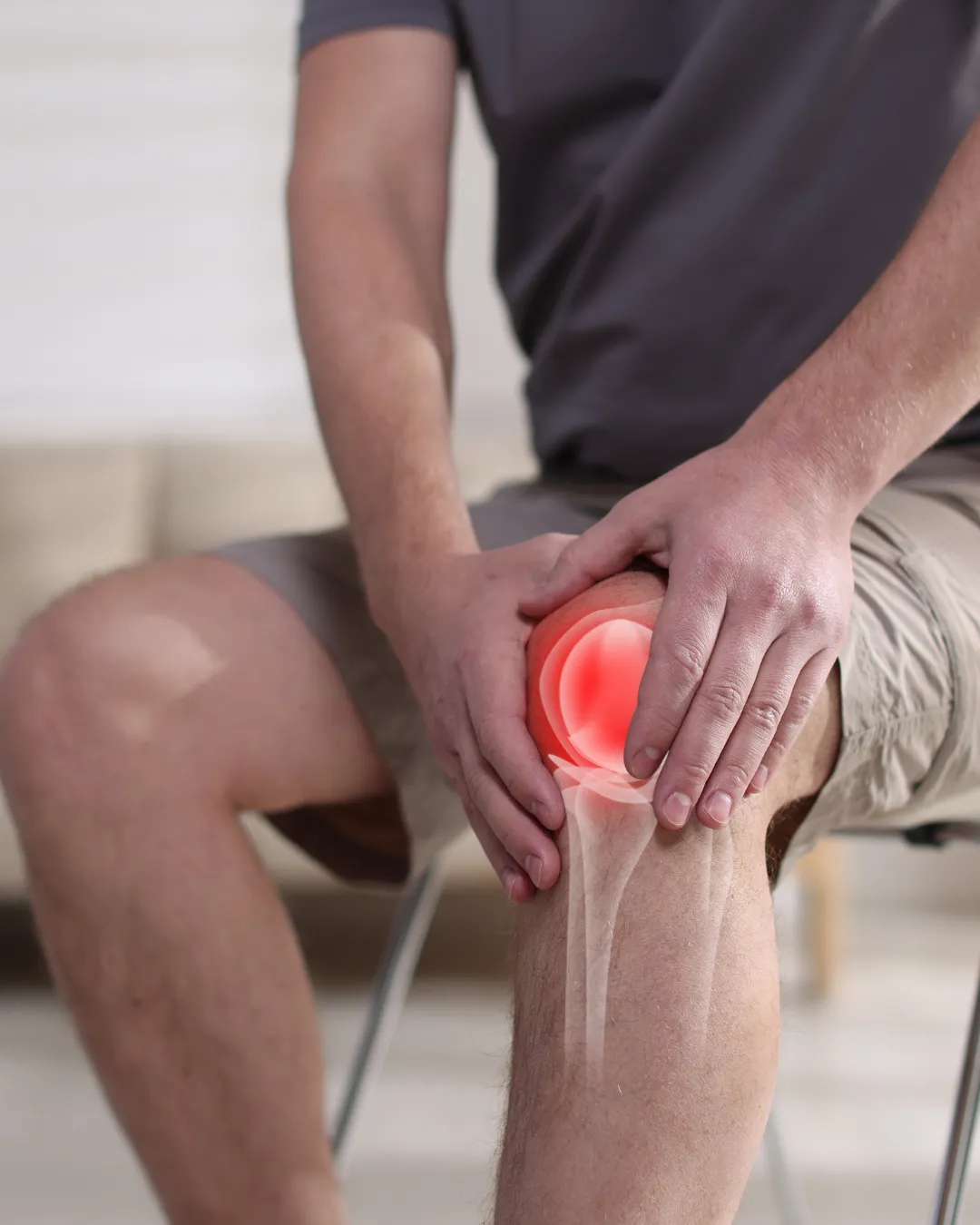
Men on testosterone replacement therapy sometimes develop persistent joint pain that standard TRT protocols cannot address on their own. Low-dose Nandrolone Decanoate — commonly called "Deca" — may bridge this gap by stimulating collagen synthesis, improving tendon remodeling, and enhancing synovial lubrication inside the joint capsule. A prospective pilot study found a 72.2% clinical response rate in hypogonadal men who had not responded to testosterone therapy alone.
You did everything right.
Your testosterone is dialed in. Your energy came back. Your drive returned. And yet — every time you push hard on a trail outside Las Campanas or reload a barbell for the first time in months, your shoulders, knees, and elbows remind you that something is still broken.
This isn't a failure of willpower. It isn't a failure of your TRT protocol. Standard testosterone replacement is one of the most effective interventions in modern hormone medicine — but it was designed to reverse androgen deficiency, not rebuild connective tissue that years of training stress and altitude-driven output have degraded.
Here in New Mexico, where the elevation and outdoor lifestyle demand more from your joints than most places in the country, persistent joint pain isn't just uncomfortable. It's the thing standing between you and the performance you worked hard enough to reclaim.
There is a clinical answer that most providers never mention. It's called low-dose Nandrolone Decanoate.
Why Does Joint Pain Persist Even When Your Testosterone Levels Are Optimized?
You're not imagining it. And your provider isn't wrong for focusing on your testosterone — the system just wasn't designed to look past the number on your lab panel.
Nandrolone Decanoate is a synthetic anabolic androgenic steroid derived from testosterone. It is a synthetic androgen with a pharmacological profile distinct from testosterone — specifically, a dramatically reduced androgenic load and a pronounced affinity for connective tissue repair. In clinical hormone medicine, it is used at low doses as an adjunct to standard TRT for men whose joint degradation has outpaced their body's recovery capacity.
Standard testosterone replacement therapy does what it's built to do: systemic androgen restoration. Libido, energy, muscle protein synthesis, red blood cell production, mood regulation — all of these respond well to optimized testosterone. What testosterone does not target with the same potency is the structural tissue — tendons, ligaments, cartilage — that bears the mechanical brunt of training and aging.
When that tissue breaks down, three things happen. One. Chronic microtrauma accumulates in tendons and ligaments faster than the body's repair capacity allows — especially in men who have returned to training after extended periods of androgen deficiency. Two. Synovial fluid production decreases with age and hormonal decline, removing the joint's internal lubrication and creating the grinding, bone-on-bone friction that shows up under load. Three. Collagen turnover slows, meaning the structural scaffolding of your joints degrades without being adequately replaced.
The result: a man who feels systemically better on TRT but still can't train through the pain. For New Mexico men managing altitude demands and outdoor performance expectations in places like the Santa Fe Foothills, that ceiling doesn't just limit training — it limits identity.
Key takeaway: Persistent joint pain on TRT is not a sign that testosterone therapy has failed — it is a sign that connective tissue degradation requires a targeted clinical intervention beyond androgen restoration alone.
How Does Nandrolone Decanoate Actually Repair Joints at the Cellular Level?
Here's what most people don't know.
Nandrolone doesn't simply add muscle. It directly alters the structural biology of joints through three distinct cellular mechanisms. Understanding the difference between these and what standard TRT offers isn't academic — it's the gap between managing pain with ibuprofen for the next decade and actually repairing the tissue that's generating it.
Upregulated collagen synthesis. Collagen is the primary structural protein of tendons and ligaments. Nandrolone directly triggers the transcription of Type III collagen — the fibrous matrix responsible for repairing the microtears that accumulate in connective tissue under heavy compound loading. This is a direct genomic action at the androgen receptor level within fibroblast cells, not a secondary systemic effect.
Enhanced tendon remodeling through ACE activity. Nandrolone drives local angiotensin-converting enzyme (ACE) activity — ACE is an enzyme involved in tissue remodeling and vascular adaptation — within tendon structures. The result is forced mechanical adaptation: tendons become physically stronger and more resistant to the load demands placed on them. Less anti-inflammatory. More structural reinforcement.
Improved synovial lubrication. Synovial fluid is the viscous lubricant secreted within the joint capsule that prevents direct bone-on-bone contact. Nandrolone promotes mild, targeted fluid retention and upregulates synovial fluid production directly inside the joint capsule — creating an internal mechanical cushion that reduces friction during heavy lifts and loaded movement.
The clinical data reinforces all three pathways. A prospective pilot study examined hypogonadal men who had been on standard testosterone replacement therapy and had not achieved meaningful joint pain relief. When low-dose Nandrolone Decanoate was co-administered at 50–100 mg per week, 72.2% of participants achieved a clinically meaningful response. Patients reported an average 52% reduction in subjective joint pain, and nearly 28% were able to discontinue NSAID and anti-inflammatory medications entirely.
That last number is significant. Chronic NSAID use — the default clinical fallback for joint pain — carries its own cumulative risk: gastric ulceration, kidney stress, cardiovascular burden. Eliminating that dependency through tissue repair rather than chemical suppression is a different outcome class altogether.
As a board-certified nurse practitioner, Jeremiah Velasquez, FNP-BC, AGACNP-BC, has observed consistently that men on comprehensive TRT protocols continue to plateau in joint recovery when connective tissue degradation isn't addressed as a distinct clinical target.
Key takeaway: Low-dose Nandrolone Decanoate addresses joint pain through three direct cellular mechanisms — collagen synthesis, tendon remodeling via ACE activity, and synovial lubrication — and a prospective pilot study demonstrated a 72.2% clinical response rate in men who had not responded to testosterone therapy alone.
What Does a Low-Dose Nandrolone Protocol Actually Look Like as an Addition to TRT?
The objection is almost always the same. "Isn't this a bodybuilder compound? Isn't it going to wreck my hair, my prostate, my cholesterol?"
Here's the honest answer: at therapeutic dosing, Nandrolone Decanoate's side-effect profile is significantly more favorable than testosterone's.
Testosterone carries a myotropic-to-androgenic (MA) index of 1.0 — meaning equal muscle-building activity relative to androgenic burden (hair loss, prostate stimulation, acne). Nandrolone's MA index sits at approximately 11.0. That's roughly eleven times the tissue-restorative benefit per unit of androgenic exposure.
The reason is metabolic. In androgen-sensitive target tissues — scalp, skin, prostate — testosterone is converted via the enzyme 5-alpha-reductase to dihydrotestosterone (DHT), a potent androgen responsible for hair follicle miniaturization, excess sebum production, and prostate tissue stimulation. Nandrolone takes a different metabolic path. In those same tissues, it converts to 5-alpha-dihydronandrolone (DHN) — a significantly weaker androgen. DHN acts as a protective buffer rather than an amplifier at androgen-sensitive sites.
In practice, at clinical doses of 50–100 mg per week, the risk profile for hair loss, acne, and prostate enlargement is meaningfully lower than an equivalent testosterone dose.
For men in New Mexico asking why their joints still hurt on testosterone therapy, the evaluation pathway looks like this: Starting with baseline labs to assess testosterone, hematocrit, PSA, and lipid panel. Followed by a telehealth consultation to evaluate symptom history, training load, and joint-specific complaint pattern. Ending with an individualized adjunctive protocol — Nandrolone dosed and titrated alongside the existing TRT regimen, with scheduled lab monitoring to guide adjustments.
You've got two options. Keep working around the pain and accepting the ceiling it puts on your training — or address the connective tissue damage directly with a protocol built for it.
Key takeaway: At therapeutic doses of 50–100 mg per week, Nandrolone Decanoate carries a substantially lower androgenic side-effect burden than testosterone due to its conversion to the weaker metabolite 5-alpha-dihydronandrolone — making it a clinically viable joint recovery adjunct under proper medical supervision.
Why Are New Mexico Men Choosing Steel City HRT & Weight Loss for Advanced TRT Protocols?
I have been on both sides of that table.
I've been the patient who was told the only clinical answer to joint pain was more ibuprofen and fewer heavy lifts. I've also been the provider navigating a healthcare system that doesn't reward the time it takes to look past the standard reference range and into the nuance underneath it.
That's what Steel City HRT & Weight Loss was built to address.
Steel City HRT & Weight Loss is LegitScript-certified — the independent compliance verification standard for telehealth hormone clinics. We are fully licensed in New Mexico and operate as a 100% telehealth clinic. No driving across the state for a clinic visit. No waiting room. No fifteen-minute appointment that ends with a referral to an orthopedist who doesn't know your hormone history.
Every medication dispensed through Steel City is sourced exclusively from 503a compounding pharmacies — regulated, sterile, and held to USP 797 standards. That is the standard that separates clinical medicine from the gray-market compounds circulating online.
Our New Mexico programs include testosterone replacement therapy, adjunctive Nandrolone Decanoate protocols, GLP-1 metabolic optimization, peptide therapy, and low-dose naltrexone — all managed through a HIPAA-secure app that keeps your provider in your corner between lab draws, not just on your annual visit.
Ready to Get Started? New Mexico Men Can See a Provider This Week.
If you are in Las Campanas, the Santa Fe Foothills, or anywhere across New Mexico — you do not need a clinic visit, a referral, or months on a waiting list. Steel City HRT & Weight Loss operates entirely on your schedule, from wherever you are in the state.
Joint pain that limits your performance isn't an inevitability. It is a protocol gap. The tissue damage is real. The clinical tools to address it are also real.
You've got two options. Keep managing the symptoms and accepting the ceiling they put on your output — or take the next step and address the problem at the cellular level.
Labs, consult, optimization — that straightforward.
It all starts at steelcity-trt.com.
Frequently Asked Questions
Q: What is Nandrolone Decanoate, and how is it used in hormone optimization? A: Nandrolone Decanoate is a synthetic anabolic androgenic steroid derived from testosterone with a highly selective tissue-restorative pharmacological profile. In hormone optimization medicine, it is administered at low doses of 50–100 mg per week as an adjunct to standard testosterone replacement therapy to target joint pain, collagen synthesis, and connective tissue repair that TRT protocols alone may not adequately address.
Q: Can I get low-dose Nandrolone added to my TRT protocol in New Mexico? A: Yes. Licensed telehealth providers in New Mexico can evaluate and prescribe Nandrolone Decanoate as part of a comprehensive TRT protocol. Steel City HRT & Weight Loss is fully licensed in New Mexico and offers adjunctive Nandrolone protocols through a 100% telehealth model — no in-clinic visit required.
Q: How long does it take to see joint pain improvement on Nandrolone Decanoate? A: Most patients begin to notice a reduction in joint pain within 4–8 weeks of initiating low-dose Nandrolone Decanoate. The full structural benefit — including collagen synthesis and tendon remodeling — typically develops over 12–16 weeks of consistent use under proper lab monitoring and clinical supervision.
Q: Is low-dose Nandrolone Decanoate safe for men who are already on TRT? A: At therapeutic doses of 50–100 mg per week, Nandrolone Decanoate carries a significantly lower androgenic burden than testosterone. It converts to 5-alpha-dihydronandrolone in androgen-sensitive tissues — a weaker metabolite than DHT — reducing the risk of hair loss, acne, and prostate stimulation compared to equivalent testosterone dosing. All protocols require scheduled lab monitoring.
Q: What does it mean for a telehealth clinic to be LegitScript-certified? A: LegitScript certification is the independent compliance verification standard for telehealth providers and online pharmacies. A LegitScript-certified clinic has been vetted for legal prescribing practices, licensed pharmacy sourcing, and regulatory compliance. Steel City HRT & Weight Loss is LegitScript-certified, which distinguishes it from uncredentialed online hormone providers.
Q: Can I access Steel City HRT & Weight Loss in New Mexico without visiting a physical clinic? A: Yes. Steel City HRT & Weight Loss is fully licensed in New Mexico and operates as a 100% telehealth clinic. Patients in Las Campanas, the Santa Fe Foothills, and across the state can complete labs, consultations, and ongoing care entirely through the Steel City HIPAA-secure patient app — no in-person visit required.
This content is for informational purposes only and does not constitute medical advice. Consult a licensed provider before beginning any hormone or weight loss therapy. Jeremiah Velasquez, FNP-BC, AGACNP-BC, is a licensed nurse practitioner. Steel City HRT & Weight Loss is a LegitScript-certified telehealth clinic.