Why Doctors Fear Estrogen – Debunking the Myth That Estradiol Is a "Female Hormone" for Men on TRT
Introduction: The Hormone Men Are Told to Fear
Walk into almost any men’s health forum or TRT group and you’ll hear it: “Keep your estrogen low.” For decades, men on testosterone replacement therapy have been told that estradiol (E2) is dangerous, feminizing, and something to “crush” with aromatase inhibitors (AIs).
But here’s the truth most clinics and even doctors don’t tell you: estradiol is not the enemy. In fact, it’s one of the most important hormones for male health — and suppressing it too aggressively can undo nearly every benefit of TRT.
Estradiol: Not Just a “Female Hormone”
Estradiol (E2) is a form of estrogen. Yes, women produce more of it, but men produce estradiol too — through aromatization of testosterone. Far from being a “female-only” hormone, estradiol is essential for:
Bone mineral density (preventing osteoporosis and fractures)
Cardiovascular health (protecting blood vessels and cholesterol balance)
Metabolic health (fat distribution, glucose metabolism)
Sexual function (libido and erectile performance)
Mood regulation (stabilizing emotions, preventing depression)
Suppressing estradiol too low robs men of these benefits.
The AI Problem: Why Crushing E2 Backfires
Aromatase inhibitors (like Arimidex or Letrozole) are often prescribed in TRT programs to “control estrogen.” But the problem is, most men don’t need them.
Risks of Overusing AIs:
Joint pain and stiffness
Increased risk of bone fractures
Fatigue and brain fog
Erectile dysfunction
Higher cardiovascular risk
Put simply: keeping E2 too low cancels out testosterone’s benefits.
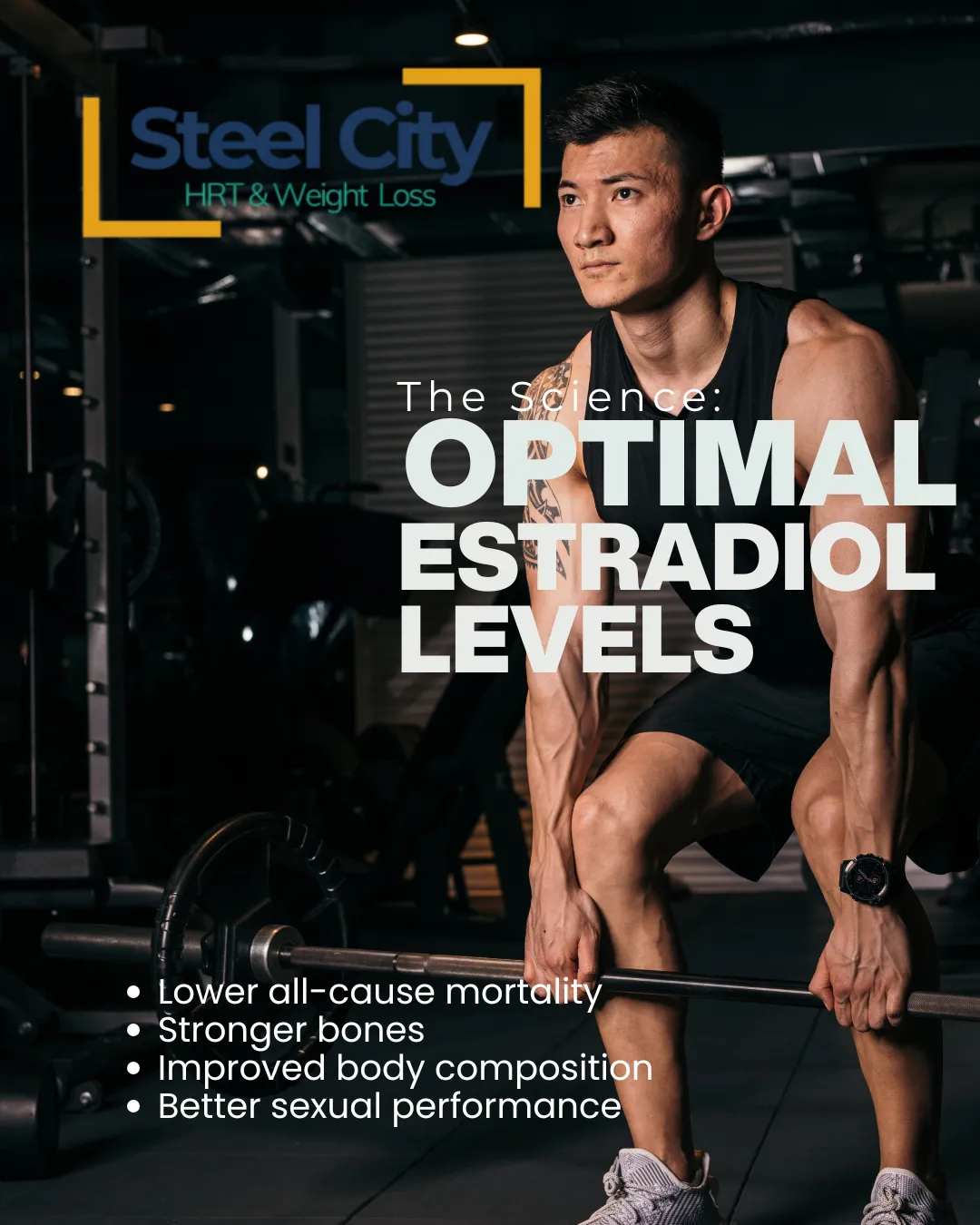
The Science: Optimal Estradiol Levels in Men
Studies show that men with balanced testosterone and estradiol experience:
Lower all-cause mortality
Stronger bones
Improved body composition
Better sexual performance
A study in The Journal of Clinical Endocrinology & Metabolism demonstrated that estradiol was just as critical as testosterone for male libido and erectile health.
The Misconception in TRT Clinics
Why do so many doctors still fear estradiol?
Old dogma: Early medical literature exaggerated the risks of estrogen in men.
Symptom confusion: Water retention, mood swings, and “estrogen dominance” are often blamed on estradiol when they may actually be related to poor testosterone management, high body fat, or other hormones.
Patient pressure: Many men demand AIs because of what they read online.
Symptoms of Low Estradiol in Men
Men who overuse AIs often report:
Dry skin and joint pain
Fatigue and mood swings
Loss of libido
Erectile dysfunction
Brittle bones over time
These are the same men who think their TRT “isn’t working” — when in fact, they’ve sabotaged themselves by killing estradiol.
Why Balance Beats Suppression
The key isn’t to fear estradiol. It’s to maintain a healthy testosterone-to-estradiol ratio (T/E2). For most men, that means:
Testosterone: mid to high normal
Estradiol: 20–40 pg/mL (not “zero”)
By allowing natural aromatization, men actually feel and perform better on TRT.
Conclusion: Don’t Kill What Heals You
Estrogen isn’t the “female enemy.” For men on TRT, estradiol is the unsung hero keeping bones strong, hearts healthy, and libido alive. Fear of estrogen is outdated, unscientific, and dangerous.
It’s time to stop crushing E2 — and start optimizing it.
Call to Action
If you’ve been told to fear estrogen or are struggling on TRT because of AI use, we can help you find balance. At Steel City HRT & Weight Loss, we don’t just treat numbers — we treat people.
👉 Call us today at 719-669-4223 or visit steelcity-hrt.com to learn how hormone optimization really works.
References
Finkelstein, J. S., et al. (2013). Gonadal steroids and body composition, strength, and sexual function in men. NEJM, 369(11), 1011–1022.
Rochira, V., & Carani, C. (2009). Estrogens and bone metabolism in men. Frontiers of Hormone Research, 37, 229–240.
Handelsman, D. J. (2017). Estrogens and male reproductive health. Asian Journal of Andrology, 19(2), 141.