
The Hidden Dangers of DIY Peptide Reconstitution
By Jeremiah Velasquez, FNP-BC, AGACNP-BC
Founder, Steel City HRT & Weight Loss | Board-Certified Family & Acute Care Nurse Practitioner
NPI: 1841894003
Reconstituting peptides at home introduces three documented safety risks: miscalculating milligram-to-microgram conversions on insulin syringes, introducing contamination through non-sterile handling and substandard bacteriostatic water, and degrading the peptide chain through improper temperature storage. Each error can render the compound ineffective or cause direct harm. Professionally prepared peptides from a LegitScript-certified clinic eliminate all three failure points.
The Danger Isn't the Peptide — It's What Happens After the Vial Arrives
The danger doesn't stop when the vial arrives at your door. That's where most people assume the hard part is over — the compound is ordered, the needle is ready, the powder is in the vial. What follows next is a process called reconstitution — mixing a lyophilized peptide powder with bacteriostatic water to create an injectable solution — and it's where things go quietly, seriously wrong.
One miscalculation on an insulin syringe. One contaminated water source. One afternoon sitting at room temperature in a garage. Any one of these turns what should be a therapeutic compound into something that does nothing at best — or lands you in an emergency room at worst.
Here's what most people browsing the research chemical market don't know: the dangerous part of DIY peptide use isn't the peptide. It's everything that happens after the vial arrives. The sourcing, the reconstitution, the storage, the dosing math. And almost none of the forum threads or online protocol guides tell you what happens when those steps fail.
What Makes DIY Peptide Reconstitution So Dangerous?
Your instinct to take your health seriously is right. The frustration with a system that offers no support for this space is justified. But the DIY peptide market built a pathway that looks accessible while hiding the technical failure points from the people using it.
A peptide is a short chain of amino acids that signals specific physiological processes in the body — from tissue healing to growth hormone stimulation. Peptide chains are structurally fragile; their therapeutic activity depends entirely on their structural integrity remaining intact from synthesis through administration. That integrity is under threat at three distinct stages.
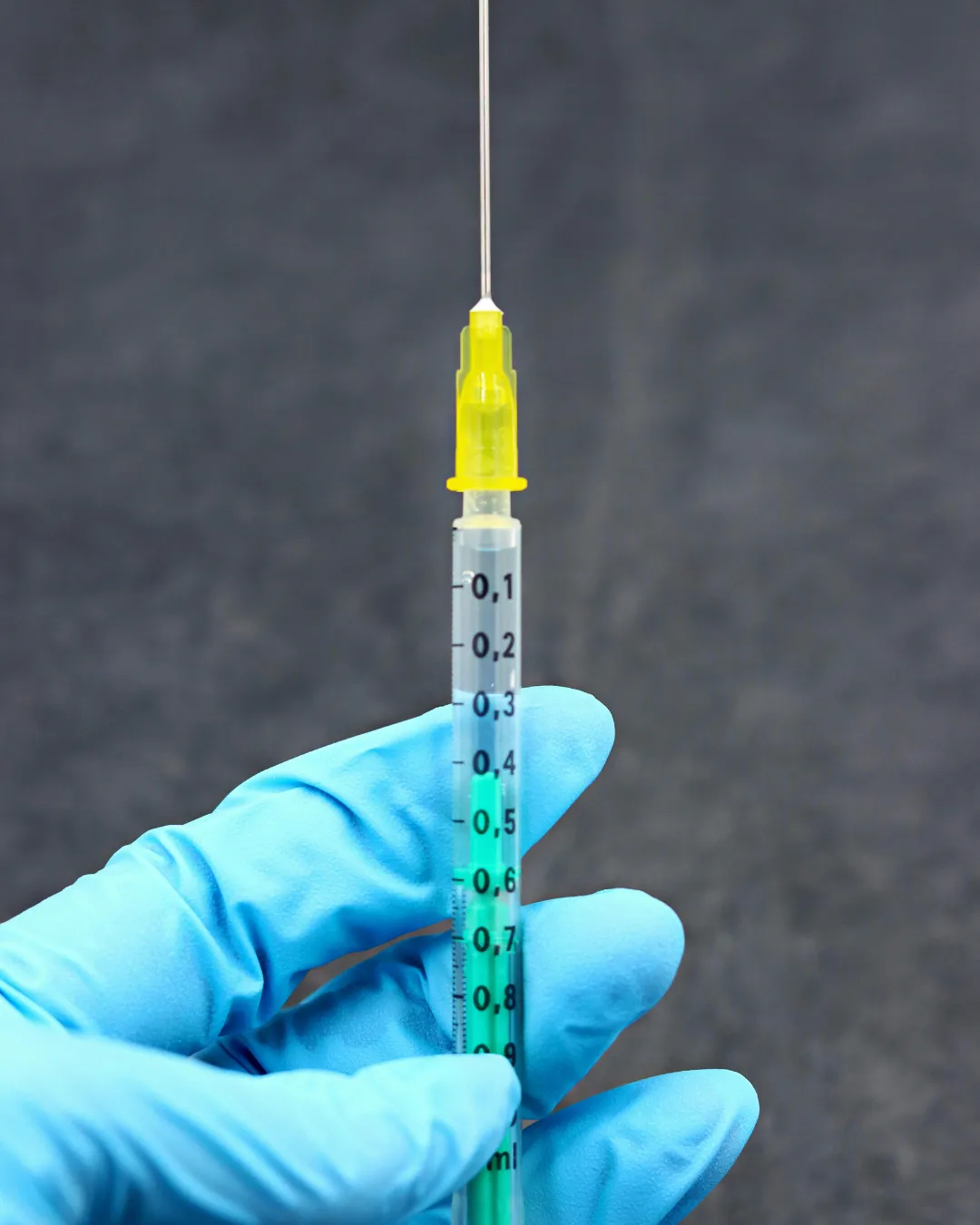
One. The math trap. Peptide dosing is prescribed in micrograms (mcg), but insulin syringes are calibrated in units — specifically the U-100 format designed for insulin at 100 units per milliliter. Converting a 250 mcg dose from a 5 mg vial reconstituted with 2 mL of bacteriostatic water requires a multi-step calculation. A decimal error of one place means injecting ten times the intended dose. In clinical pharmacy, a 10-fold dosing error is classified as a serious adverse medication event. Outside a clinical setting, it goes undetected until symptoms appear.
Two. The contamination risk. Bacteriostatic water is sterile water preserved with 0.9% benzyl alcohol to inhibit microbial growth. Not all bacteriostatic water is manufactured to the same standard. Products sold alongside research-use-only (RUO) compounds are frequently unverified for sterility, heavy metal content, or endotoxin load. Reconstituting even a structurally intact peptide with substandard bacteriostatic water — outside a sterile compounding environment — introduces microbial and particulate contamination risk directly into an injectable solution.
Three. Cold chain failure. Lyophilized peptides are relatively stable at room temperature before reconstitution. After mixing, they become biochemically active and highly temperature-sensitive. Storing a reconstituted vial above 4°C (39°F) degrades the peptide chain progressively. At room temperature, potency loss begins within hours. A fully degraded peptide isn't just ineffective — some structural breakdown products can produce immunogenic fragments that trigger an adverse immune response.
Key takeaway: DIY peptide reconstitution carries three compounding failure categories — dosing math errors, contamination exposure, and cold chain failure — any one of which can compromise both safety and efficacy independent of the other two.
Why Are These Errors So Common in Self-Directed Peptide Protocols?
Here's what most people don't know. The protocols circulating on peptide forums weren't written by compounding pharmacists or licensed clinicians. They were written by enthusiasts, often copying from other enthusiasts, in a market that grew specifically because these compounds exist in a regulatory gray zone.
Research-use-only compounds — the category under which most internet-sourced peptides are sold — are not approved for human use. That's not a technicality buried in fine print. It's the accurate description of what the compound is and what it was manufactured for: laboratory bench research, not human injection. RUO synthesis operations are not held to pharmaceutical-grade sterile manufacturing standards, endotoxin limits, or potency consistency testing.
Think of it this way: a peptide synthesized for laboratory research is like industrial-grade reagent ethanol. Chemically related to something you could theoretically use. Not interchangeable in practice. Not built for the same safety application. Not appropriate for the same purpose.
According to United States Pharmacopeia (USP) Chapter 797 — the federal standard governing sterile compounding for human-use injectables — every preparation intended for injection must meet strict sterility testing, microbial limit controls, and beyond-use dating parameters. RUO peptides purchased through online vendors meet none of these requirements by design.
A 2018 analysis published in the Journal of Pharmaceutical Sciences identified dosing errors involving concentrated injectable preparations requiring unit conversion as one of the most common categories of serious adverse outpatient medication events. The milligram-to-microgram conversion on insulin syringes — the exact math required for DIY peptide administration — is precisely the error pattern documented in that literature.
Key takeaway: RUO peptides are not manufactured to human-use sterility or potency standards, and the dosing math required for self-administration is the same conversion error class documented in serious adverse medication event literature.
What Does Safe, Clinically Supervised Peptide Therapy Actually Look Like?
The alternative to DIY isn't more complicated. It's what clinical medicine looked like before an unregulated supplement market convinced people that injecting research compounds at home was a reasonable shortcut.
Safe peptide therapy starts with a real clinical evaluation — not a quiz, not a form, not an algorithm. A licensed provider conversation where your history, goals, and relevant labs determine the program. Starting with a telehealth consultation, followed by prescribing through a 503a compounding pharmacy operating under USP 797 sterile standards, and ending with professionally prepared peptides delivered to your door with clear, accurate administration instructions.
Here's what that eliminates. One. The dosing math is done by a licensed pharmacist at the point of dispensing — not by you at a kitchen counter with a conversion chart from a forum. Two. The contamination exposure disappears because a 503a pharmacy maintains pharmaceutical-grade sterile conditions that no household environment can replicate. Three. Cold chain integrity is maintained because the medication is shipped properly and storage instructions come from the prescribing clinic — not forum consensus.
We love a good neighborhood BBQ. But we generally recommend keeping the DIY projects limited to the patio — not your bloodstream.
You've got two options. Continue managing every reconstitution failure point yourself in an unregulated sourcing environment — or pursue a clinical pathway where those failure points are handled by a licensed provider and a certified pharmacy. The choice between those two outcomes is one worth making deliberately. For more on what separates 503a-compounded peptides from research-use compounds, see our peptide sourcing and safety overview.
Key takeaway: Clinically supervised peptide therapy through a 503a compounding pharmacy eliminates all three primary failure points of DIY protocols — math, contamination, and temperature — replacing guesswork with a pharmaceutical-grade standard.
Why Are Patients Choosing Steel City HRT & Weight Loss for Peptide Therapy?
I have been on both sides of this. As a provider who also understands the optimization space from a patient perspective, I have personally seen the frustration of trying to navigate a market where quality is unverifiable and guidance is nonexistent. That experience is part of why Steel City operates the way it does.
Steel City HRT & Weight Loss is LegitScript-certified — one of a small number of telehealth hormone optimization clinics in the country to carry that designation. LegitScript certification means our prescribing and sourcing practices have been independently reviewed against pharmacy law and clinical standards. We source exclusively through 503a compounding pharmacies operating under USP 797.
There is no clinic visit required. We are fully telehealth, and patients connect through a HIPAA-secure app. Medications arrive pharmacy-prepared, pre-dosed with accurate administration instructions, and shipped under proper cold chain protocols. No mixing, no math, no guesswork about whether the bacteriostatic water is actually sterile.
As a board-certified nurse practitioner — Jeremiah Velasquez, FNP-BC, AGACNP-BC — the programs at Steel City include peptide therapy, TRT/HRT, GLP-1 metabolic optimization, and low-dose naltrexone. The peptide protocols are not pulled from a forum. They are individualized clinical programs, monitored, and adjusted over time. We walk that path with you.
Ready to Start a Peptide Protocol Without the Risk?
Most patients who reach Steel City have already spent time in the DIY market — and most of them have a story. Peptides that never seemed to work. Doses that felt wrong. Instructions that left too much room for error.
There is a better way to do this. No mixing, no math, no wondering whether your sourcing is pharmaceutical-grade or a research bench.
Labs, consult, optimization — that easy.
Keep running the DIY playbook, or start a protocol designed by a licensed provider and filled by a 503a-certified pharmacy. That decision is yours.
It all starts at steelcity-trt.com.
Frequently Asked Questions
Q: What is bacteriostatic water and why is it used for peptide reconstitution? A: Bacteriostatic water is sterile water preserved with 0.9% benzyl alcohol to inhibit microbial growth. It is used to dissolve lyophilized peptide powders into injectable solutions. Not all bacteriostatic water meets pharmaceutical sterility standards. Products sold alongside RUO compounds are frequently unverified for endotoxin content, making sourcing quality a direct patient safety variable.
Q: How do dosing errors happen when using insulin syringes for peptide injections? A: Peptide doses are prescribed in micrograms, but insulin syringes measure in units calibrated to 100 units per milliliter — a format designed for insulin. Converting a peptide dose from milligrams to the correct syringe unit draw requires multi-step math. A single decimal error produces a 10-fold dosing mistake, the same error class documented in serious adverse outpatient medication events.
Q: What happens to reconstituted peptides stored at the wrong temperature? A: Once reconstituted, peptides become biochemically active and temperature-sensitive. Storing a reconstituted peptide vial above 4°C (39°F) causes progressive structural degradation. Potency loss begins within hours at room temperature. A degraded peptide is not only ineffective — some structural breakdown products produce immunogenic fragments that may trigger an adverse immune response in the body.
Q: What is the difference between RUO peptides and 503a compounded peptides? A: Research-use-only (RUO) peptides are manufactured for laboratory bench research and are not produced to human-use sterility, endotoxin, or potency standards. Peptides compounded at a 503a pharmacy are prepared under USP Chapter 797 sterile compounding standards with verified sterility testing and controlled beyond-use dating — the standard required for safe human injection under clinical supervision.
Q: Can I access safe peptide therapy without visiting a clinic in person? A: Yes. Licensed providers can evaluate, prescribe, and monitor peptide therapy programs through telehealth. Steel City HRT & Weight Loss offers fully telehealth peptide therapy — no in-person clinic visit required. Medications are prepared by a 503a compounding pharmacy and delivered directly to the patient with accurate, professionally calculated dosing instructions.
Q: Is Steel City HRT & Weight Loss a legitimate clinic for peptide therapy? A: Steel City HRT & Weight Loss is a LegitScript-certified telehealth clinic licensed across multiple states. All peptide protocols are developed and managed by Jeremiah Velasquez, FNP-BC, AGACNP-BC. Medications are sourced exclusively through 503a compounding pharmacies operating under USP 797 sterile compounding standards — not from research-use-only suppliers.
This content is for informational purposes only and does not constitute medical advice. Consult a licensed provider before beginning any hormone or weight loss therapy. Jeremiah Velasquez, FNP-BC, AGACNP-BC, is a licensed nurse practitioner. Steel City HRT & Weight Loss is a LegitScript-certified telehealth clinic.